Left-Turn Accidents in California: Who's at Fault?
A left-turn accident is one of the most common types of California road accidents. In this case, a small mistake or failure to yield can cause a major accident. Now, the biggest question is, who is at fault in a left-turn accident?
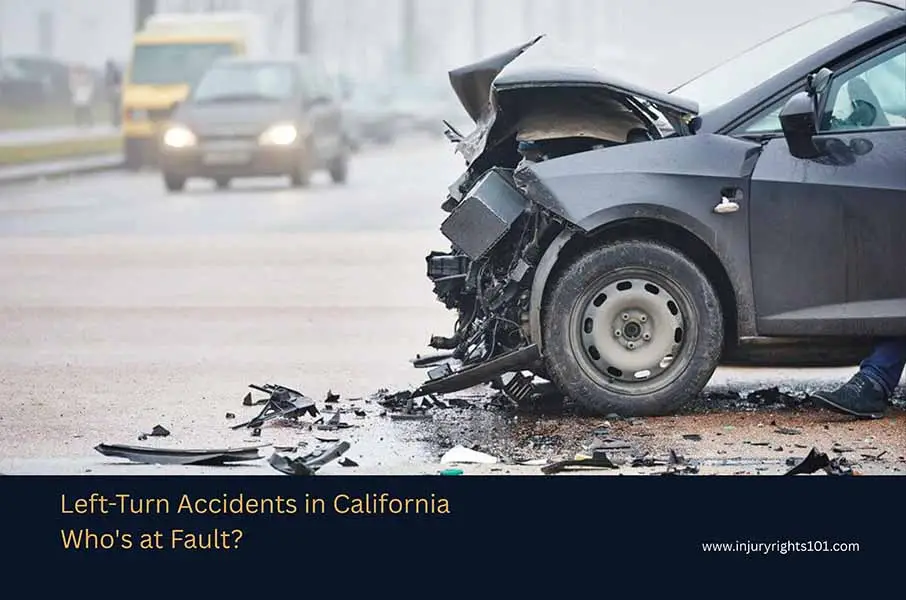
According to California traffic laws, the driver turning left must yield the right of way to the vehicle coming from
the opposite direction. But if the other driver is speeding, driving distracted, or violating a red light, then both
are liable. According to California
Comparative Negligence Law
, more than one person is partially responsible, and compensation is available.
In the article, we will find out—
What are California's left turn accident laws?
How is fault determined?
What type of evidence is most important? And
When should an insurance claim or personal injury claim be made?
In what situations does one need to seek the help of a California car accident lawyer?
Today we will find clear answers to important questions related to left-turn accidents in California.
California Left-Turn Accident Laws Explained
To avoid left-turn accidents, California has specific traffic laws. The main purpose of this law is to ensure safety and reduce the risk of accidents. Therefore, it is important for a driver making a left turn to have a clear understanding of his responsibilities.
According to California Vehicle Code section 21801 , if a driver wants to take a left, he must yield the right of way to the vehicle coming from the opposite direction. If a driver makes a left turn without leaving a certain distance or sufficient time, then it will be considered a failure of yield.
But in all cases, the driver from the left is not responsible for the accident. If the other driver was speeding, distracted, or ran a red light, that driver may also share responsibility for the crash. To determine who was at fault, evidence such as the police report, witness accounts, dashcam footage, and other details from the accident can be carefully reviewed.
Comparative negligence law is prevalent in California. In this case, a driver is not completely deprived of compensation even if he is partially responsible for the accident. Accident compensation will be reduced according to the percentage of his fault.
If you follow the above laws and give the Right of Way at the right time, it is possible to avoid road accidents and legal complications in California.
Who is usually at fault in a turn accident?
In most cases, the driver turning left is held responsible in left-turn accidents. According to California traffic laws, the driver who is turning must yield the right of way to the car coming from the opposite direction. If for some reason the driver turning left does not see a safe opportunity and a collision occurs, it will be considered a failure of yield.
For example, let's say you get a green light at a busy intersection but there is no separate green left arrow. In this case, you must yield the right of way to the car coming from the opposite direction. In this situation, the cars coming from the opposite direction have the right of way first, so if you try to turn left and an accident occurs, you will be responsible for the accident.
Left-turn crashes can happen in many different ways, so simply making a left turn does not automatically make a driver responsible for the collision. For example, if the oncoming driver was speeding, distracted, ran a red light, or otherwise violated traffic rules, that driver may also share liability. To determine who was actually at fault, factors such as the police report, witness accounts, dashcam recordings, and other available evidence from the crash may be carefully examined.
The court and the insurance company analyze the behavior and evidence of both drivers and make a decision. So who is at fault in a left-turn accident is not always the answer. Although in most cases the driver turning left is responsible, in most cases the circumstances and evidence of each incident determine the final decision.
Situations where the Left-Turning Driver May Not Be at fault
In the case of a left-turn accident, the driver turning left is most often held responsible. However, this is not true in all cases. Sometimes an accident can occur due to the mistake or violation of the law by the driver coming from the opposite direction. In that case, the fault goes completely or partially to the other driver. Some situations are mentioned where the driver turning left is not responsible for the accident—
Oncoming driver speed
If the speed of the vehicle coming from the opposite direction is more than the speed limit, it is difficult for the
driver turning left to judge the correct time and distance. This type of speeding is one of the major causes of
accidents.
Red light violation
If the intersection is crossed by ignoring the red light coming from the opposite direction and an accident occurs
due to this, the responsibility for the accident is not the driver turning left.
Distracted driving
If the driver uses a mobile phone or sends an SMS to someone or loses attention for any other reason, it is not
possible for him to avoid the accident. This type of distracted driving is responsible for the accident.
Driving under the influence
If the driver driving in the opposite direction drives the car under the influence of alcohol, his reaction capacity
decreases. This increases the chances of an accident, and he is guilty of the accident.
Illegal lane change
If the driver coming from the opposite direction suddenly changes lanes or moves into the wrong lane, it becomes
difficult for the driver turning left to avoid an accident.
Driving without headlights at night
Driving without headlights at night makes it difficult for other drivers to see your vehicle. Then the driver who made the left turn is not solely responsible if an accident occurs.
In the case of a left-turn collision, the police, insurance company, and court analyze accident evidence, witness statements, dashcam video, and other evidence to determine who is at fault under California comparative negligence law.
Common causes of Left Turn Accidents in California
Left-turn accidents in California can happen for many different reasons. Even a momentary lapse in judgment or a minor driving error can result in a serious collision. Some common reasons are
Failure to yield the right of way: not giving the right of way to the vehicle coming from the opposite direction. According to California Vehicle Code section 21801, it is the driver's responsibility to wait until there is a safe opportunity to turn left.
Speeding: If the speed of the vehicle is more than the speed limit, it is difficult for other drivers to understand its distance and correct speed, which is one of the causes of accidents.
Distracted driving: If the driver uses a mobile phone, messages, looks at the GPS, or loses attention for any other reason, it is difficult for him to avoid an accident, which makes the accident easier.
Running a red light: When a car tries to cross the intersection by ignoring the red light, it can collide directly with the vehicle turning left, which is one of the causes of accidents.
Misjudging distance and speed: means that if a driver cannot determine the speed and distance of another vehicle correctly, then accidents occur.
Poor visibility: due to large trees, buildings, rain, fog, etc. on the side of the road means cars coming from the other direction cannot be seen, which is one of the reasons for accidents.
Aggressive or reckless driving: means that if the driver increases the speed of the car and changes lanes or disobeys traffic laws, the chances of accidents increase greatly.
Left-turn accidents occur in California due to the above reasons. Driving carefully and following traffic laws properly are effective in preventing accidents.
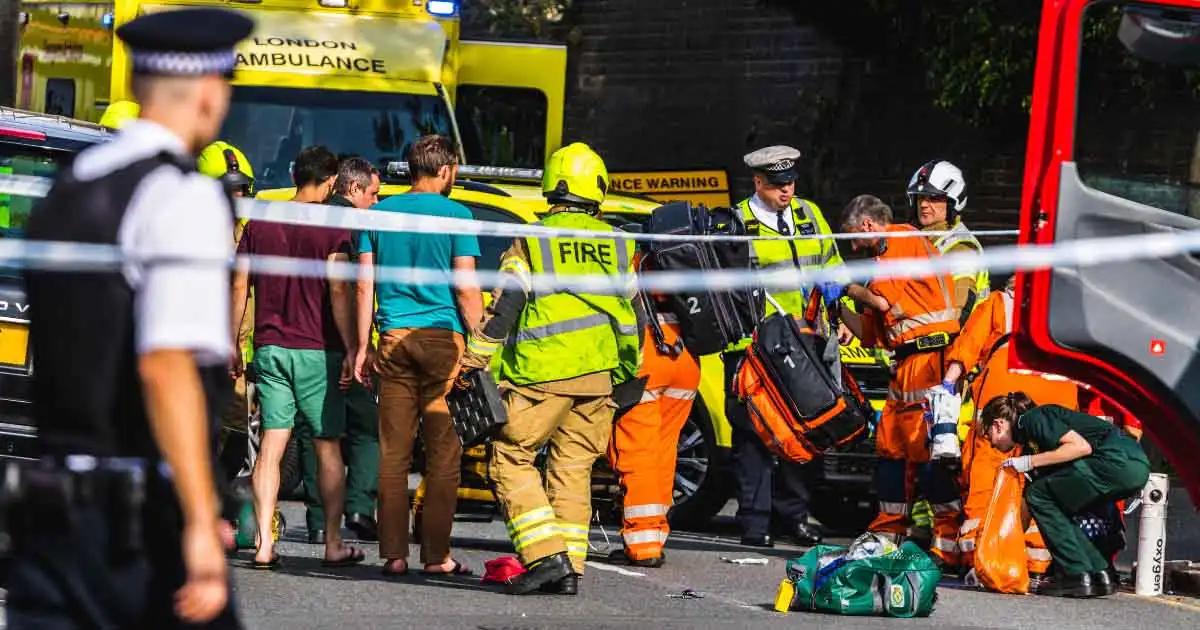
How fault is determined after a left-turn crash
No one can be declared guilty immediately after a left-turn accident. Police, courts, and insurance companies analyze eyewitness statements, dash cam videos, accident evidence, etc., to determine fault. Since the context of each accident is different, the decision depends on the evidence.
Witness statements are those who saw the incident at the scene. Eyewitness statements are considered important evidence by the court and the insurance company.
Photos of the accident scene, dash cam videos, CCTV footage, or traffic camera videos help identify the location, speed, and signal conditions of the vehicle in the collision.
By looking at the direction of the collision and the skid marks on the road, the speed of the accident can be estimated, and, if necessary, experts analyze this information to determine what caused the accident.
If a vehicle breaks the law, fails to yield, speeds, violates a red light, or is distracted driving, then the responsibility for the accident falls more on it.
If the accident was caused by the fault of both drivers, then according to California negligence law, the percentage of fault of the driver is determined, and the insurance claim and accident compensation are determined based on that. Therefore, the final decision of the left turn collision depends on the evidence and applicable law.
Evidence that can prove fault
The fault of a left-turn accident does not only depend on the driver's statement but also on the statements of eyewitnesses, dashcam videos, and accident evidence. Here are some important pieces of evidence that play an important role in insurance claims and court cases:
-
Photos of the accident scene, videos, road conditions, traffic signal conditions, skid marks, and videography of the surrounding area prove how the accident occurred.
-
Dashcam footage or nearby accident footage is strong evidence. It shows whether a driver broke the law.
-
The initial report that the police prepare after the accident, which mentions the driver's location and initial observations, is considered important information in insurance companies and courts.
The statements of witnesses present at the scene are important evidence.
-
If someone is injured in an accident, immediate medical care must be provided. Medical reports, the type of treatment, play a special role in complete evidence and accident compensation.
-
The report of the death and repair costs of the vehicle damaged in the accident shows the direction of the collision and the severity of the injuries.
-
In complex accidents, accident reconstruction experts analyze vehicle damage and other evidence to explain how the accident occurred.
Accident evidence can be used to determine fault, especially when supported by eyewitness accounts.
California Comparative Negligence Rule
In the case of a left-turn accident, not always is one driver completely at fault. Sometimes both drivers are at fault. In this case, the California comparative negligence rule applies in California.
According to this rule, if a driver admits to the accident, he can claim accident compensation, but the amount of his compensation will be reduced according to the percentage of his fault.
For example, in a left-turn accident, the investigation found that the driver who took the left turn was 70% at fault and the driver from the opposite direction was speeding, so his fault was 30%. Now if the total compensation amount is $1,000,000, then the 70% at-fault driver will lose 70% of his compensation and will get only $300,000; similarly, the driver whose fault is 30% will get 70% of the compensation.
In this rule, the statements of witnesses, dashcam video, accident evidence, and police accident reports play an important role. After analyzing all this evidence, the driver's fault rate is determined.
According to the California comparative negligence law, even if you are partially at fault, your right to compensation is not completely lost. However, if you present accurate and reliable evidence, you can get a fair insurance claim.
What Compensation Can You Recover?
If you are a victim of a left turn accident due to the negligence or mistake of another driver or someone else, you have the right to compensation. The compensation for the incident depends on the injuries, financial losses, and circumstances of the incident. Some ideas of compensation are given.
You can claim damages for hospital bills, weapons smuggling, medicine, physiotherapy, and future medical expenses due to the accident.
If you cannot work for a few days or your future income is reduced due to the injuries you received in the accident, you can claim compensation for lost wages.
If your car or other personal property is damaged as a result of the accident, you can claim compensation for the cost of replacing the damaged part.
Compensation covers more than your bills. California law also allows non-economic damages for physical pain, emotional distress, anxiety, and a reduced quality of life.
In addition to all these things, in some cases, transportation costs for rehabilitation or medical assistance at home or long-term care costs may be part of a personal injury claim.
The amount of compensation a driver injured in an accident will receive depends on the evidence of the accident, the extent of the injuries, and the percentage of fault according to the California comparative negligence rule. Therefore, it is very important to preserve medical documents, bills, and other important evidence if you are the victim of a left-turn accident.
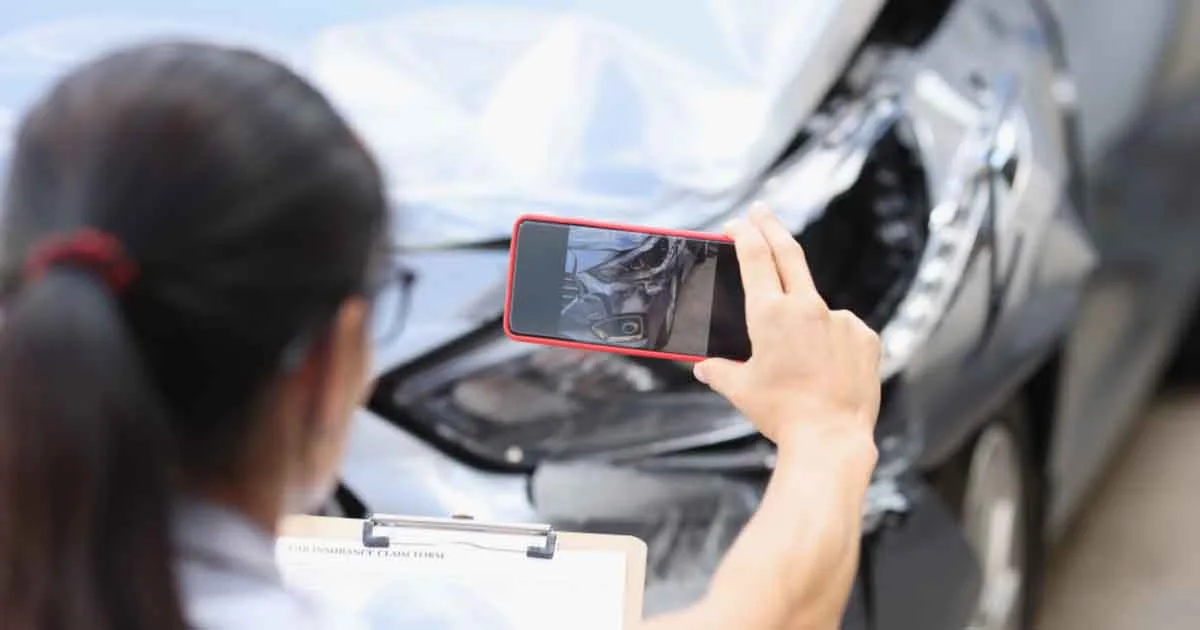
What to do after a left-turn accident?
The right steps after a left-turn accident can ensure the safety and health of a driver and an insurance claim. Taking the right steps makes it easier to prove fault in the future and get accident compensation. Here are some steps to take after an accident:
-
Stay safe and check for injuries. See if you and the other driver are injured somewhere, and if possible, move the car to a safe place and call 911 in case of an emergency.
-
Call the police and report the accident to the police immediately, no matter how big or small. Police accident report, which later serves as important evidence in the case of a personal injury claim or insurance claim.
-
Exchange information: Collect the other driver's name, phone number, driving license, vehicle registration, and insurance information.
-
Collect evidence: Take pictures of the accident scene as soon as possible after the accident, including car damage, traffic signals, road conditions, and skid marks. If possible, collect eyewitness statements and dashcam footage.
-
Get medical attention: Seek medical attention for minor or major injuries. Medical reports are important evidence for later compensation.
-
Notify your insurance company: Notify your insurance company about the accident as soon as possible after the accident.
-
Consult a lawyer: If the accident is serious, the financial loss is large, or there is a dispute about fault, contact an experienced California car accident lawyer.
When should you contact a California car accident lawyer?
Not all left-turn accidents require a lawyer, but in some emergency situations, an experienced California car accident lawyer can play an important role in protecting a driver's rights and obtaining a fair accident settlement.
If a driver is seriously injured, requires long-term medical treatment, or has permanent physical damage, an accident lawyer is needed, and if the other driver or insurance company disputes the fault or tries to blame a specific driver, you need to get legal help.
If the insurance company denies the insurance claim or delays in paying compensation or offers compensation, you need to get legal help, and if there are any large medical expenses, lost wages, major damage to the vehicle, or future medical expenses, you need to get legal help. If death occurs due to a left-turn accident, you need to get legal help to file a wrongful death claim .
By contacting an experienced California car accident lawyer as soon as possible after the accident, it is possible to collect important evidence, meet the legal deadlines, and present a strong personal injury claim.
Conclusion
In most cases of a left turn accident in California, the driver who made the left turn is at fault. However, not all cases are the same. The driver who made the left turn is liable due to failure to yield. But if the driver of the car coming from the other direction is speeding, running a red light, or distracted driving, the accident also occurs. Therefore, the fault of the accident is determined by the evidence and according to California law.
After an accident, it is very important for a driver to get prompt medical treatment, collect accident evidence, save the police report, and file an insurance claim in a timely manner. If for some reason there is a dispute about fault or there is a large financial loss or the insurance company wants to pay less compensation or does not want to pay, then an experienced California car accident lawyer should be consulted. He will play an important role in making future claims successful with the right steps and evidence.
Frequently asked questions (FAQs)
Who is usually at fault in a left-turn accident in California?
In most left-turn accidents, the driver making the turn is the one at fault. Because according to the law, the car
coming from the opposite direction has to give the right of way, which most of the time the left-turn driver does
not yield. If they refuse, the collision occurs. Also, if the driver coming from the opposite direction is speeding,
has a red light violation, or is driving destructively, then both of them are at fault, not just one.
Can the left-turning driver avoid fault?
Of course, a left-turn driver can avoid fault with appropriate evidence. In this case, the evidence must be added to
show that the driver coming from the opposite direction broke the law or was the main cause of the accident. Only
then can the left-turn driver be completely or partially free from fault.
What is California's comparative negligence?
This is a law in California where if both drivers are at fault in an accident, the percentage of fault of each is
determined. Accident compensation is given according to this percentage.
What types of evidence are more important after a left-turn accident?
Police accident reports, dashcam footage, medical records, eyewitness statements, damage to the vehicle involved in
the accident, photos and videos of the accident scene, etc. are all important evidence after the accident.
How long does anyone have to file a claim in California?
Personal injury claims generally have a time limit of up to two years from the date of the accident. But in some
cases, the time limit may vary, so if necessary, you should seek the advice of an experienced lawyer quickly.
Should anyone hire a California car accident lawyer?
If there is serious injury, major financial loss, or a dispute over fault as a result of the accident, then you need the advice of an experienced California car accident lawyer.